
Small Business Tax Deductions: Everything I Wish I Knew Before My First Audit Scare
Advertisements
Here’s a stat that still blows my mind — the SBA estimates that small business owners overpay on taxes by an average of $12,000 a year simply because they miss deductions they’re entitled to. Twelve. Thousand. Dollars. When I started my first side hustle about eight years ago, I was absolutely one of those people leaving money on the table, and honestly it still stings a little to think about.
Understanding small business tax deductions isn’t just some boring accounting exercise. It’s literally the difference between a business that thrives and one that’s constantly scraping by. So let me walk you through what I’ve learned — the hard way, mostly — so you don’t have to repeat my mistakes.
The Home Office Deduction: My Biggest Early Mistake
Okay so when I first started working from home, a friend told me “don’t claim the home office deduction, it’s a red flag for audits.” I listened to that advice for three years. Three years of unclaimed deductions, gone forever.
The truth is, the IRS home office deduction is completely legitimate as long as you use a dedicated space regularly and exclusively for business. You’ve got two options here — the simplified method gives you $5 per square foot up to 300 square feet, or you can calculate actual expenses like rent, utilities, and insurance proportionally. I switched to the actual expense method last year and it was a game changer for my tax bill.
Vehicle and Mileage Expenses That Add Up Fast
This one caught me off guard. I was driving to meet clients, picking up supplies, running to the post office — and not tracking a single mile. What a waste.
For 2024, the standard mileage rate was 67 cents per mile, and honestly those trips add up way quicker than you’d think. I started using an app called Everlance to automatically track my business mileage, and within the first month I had logged over 400 miles I would’ve otherwise forgotten about. Just remember — your commute from home to a regular office doesn’t count, but pretty much everything else business-related does.
Business Expenses You’re Probably Forgetting

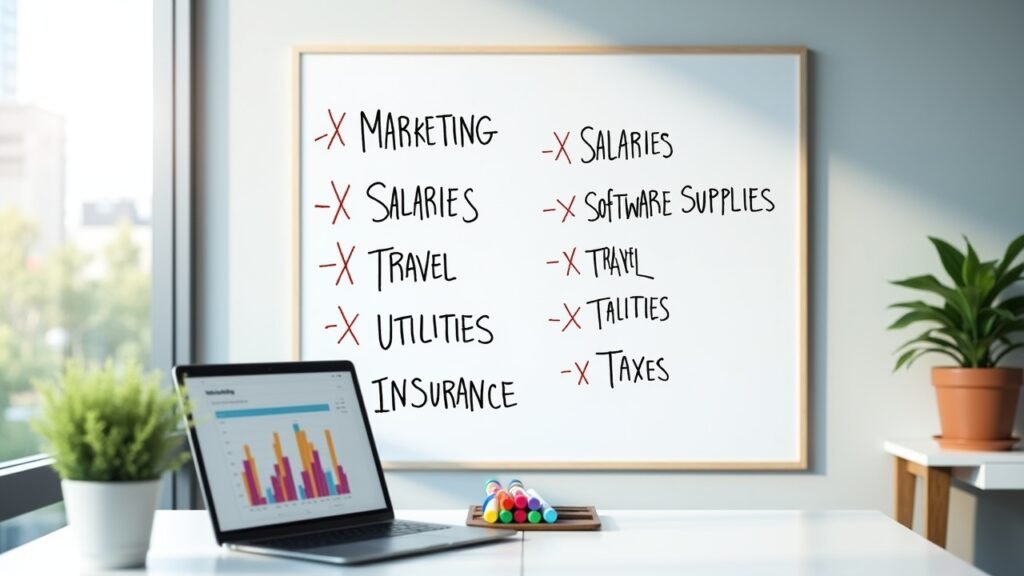
Here’s where things get fun. There are so many write-offs that small business owners just flat out miss because they don’t seem “big enough” to matter. But they do.
- Software subscriptions like QuickBooks, Canva, or Zoom
- Professional development courses and business books
- Business insurance premiums
- Office supplies — yes, even printer ink and sticky notes
- Website hosting and domain fees
- Marketing and advertising costs, including social media ads
- Bank fees and credit card processing charges
- Professional services like hiring an accountant or lawyer
I once forgot to deduct my $400 annual accounting software subscription for two consecutive years. It’s not a massive amount on its own, but when you start stacking these overlooked deductions together, you’re talking real money.
The Self-Employment Tax Deduction Nobody Talks About
This was a revelation for me. When you’re self-employed, you pay both the employer and employee portions of Social Security and Medicare taxes — that’s a whopping 15.3%. But here’s the thing most people don’t realize: you can deduct the employer-equivalent portion (7.65%) on your Form 1040.
Advertisements
It’s an above-the-line deduction, which means you get it whether you itemize or not. When I first discovered this, I literally texted my accountant like “why didn’t you tell me this sooner?” Turns out she had, I just wasn’t paying attention. Classic me.
Keep Your Receipts — Seriously, I Mean It
I know, I know. Everyone says this and it sounds so basic. But documentation is what separates a legitimate tax deduction from a denied claim during an audit.
The IRS generally requires you to keep records for at least three years from the date you filed. I use a combination of cloud storage and a dedicated business credit card so every transaction has been automatically categorized and backed up. Trust me, future you will be so grateful.
Your Tax Bill Doesn’t Have to Be Painful
Look, I’m not a CPA, and every business situation is different — so definitely consult with a qualified tax professional before making major decisions. But knowing which small business tax deductions exist is half the battle. The other half is actually claiming them consistently, year after year.
Start by reviewing just one category from this list today. Even small changes in how you track expenses can save you hundreds, if not thousands. And if you want more practical tips like these, head over to Deduction Desk where we break down tax strategies in plain English — no jargon, no judgment, just stuff that actually helps.