
Independent Contractors: How to Set Your Rates After Taxes
Most freelancers underprice their services because they forget about self-employment tax. Here's how to calculate what you actually take home and set rates accordingly.

Most freelancers underprice their services because they forget about self-employment tax. Here's how to calculate what you actually take home and set rates accordingly.

Under the Augusta Rule, you can rent your home up to 14 days a year and keep the income completely tax-free. Here's who can use it and how to document it properly.

Teachers can deduct up to $300 in out-of-pocket classroom expenses—even without itemizing. Here's what qualifies, how to claim it, and what else educators can deduct.

Reimbursed mileage and deducted mileage are two different things. Here's how each works, when you can claim both, and what the IRS allows in each scenario.

Schedule C is where your business income and expenses come together. This step-by-step walkthrough covers every section so you file it right the first time.

Got 1099s from five different clients? Here's how to aggregate all your freelance income, report it correctly on Schedule C, and avoid missing a single dollar.
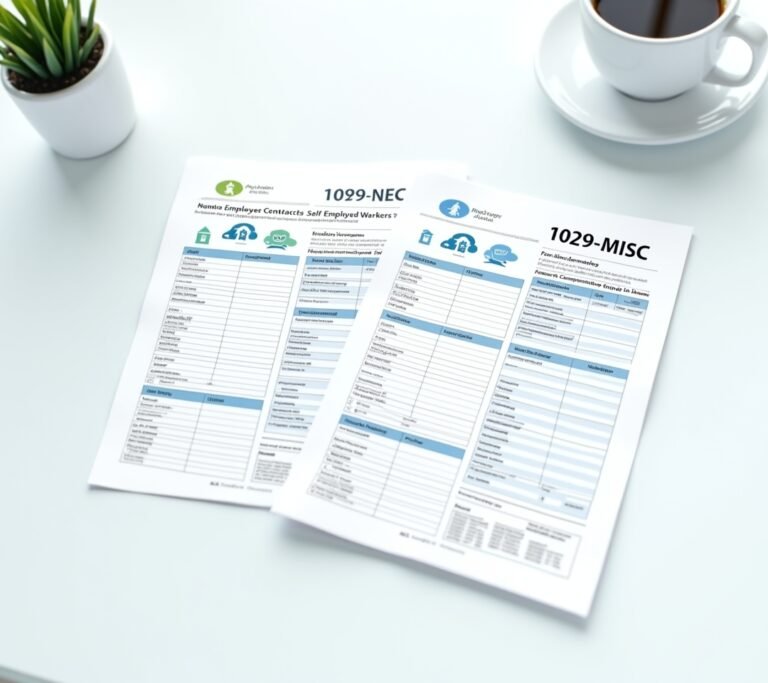
The 1099-NEC replaced Box 7 of the 1099-MISC in 2020. Here's what each form covers, why the split happened, and how to report income from each correctly.

Courses, books, certifications, and conferences can all be deductible if they maintain or improve your current business skills. Here's how to claim them correctly.

The simplified safe harbor method lets you deduct $5 per square foot of home office space—no complex calculations needed. Here's how to use it correctly.