
The Backdoor Roth IRA Strategy for High Income Earners: What I Wish I Knew Sooner
Advertisements
Here’s a stat that still blows my mind — in 2024, if you’re a single filer making over $161,000, the IRS basically says “nope, no Roth IRA for you.” That’s wild, right? But here’s the thing: there’s a perfectly legal workaround that high income earners have been using for years, and it’s called the backdoor Roth IRA strategy. I stumbled onto this way too late in my financial journey, and honestly, I’m still a little salty about all those years of missed tax-free growth.
So What Exactly Is a Backdoor Roth IRA?
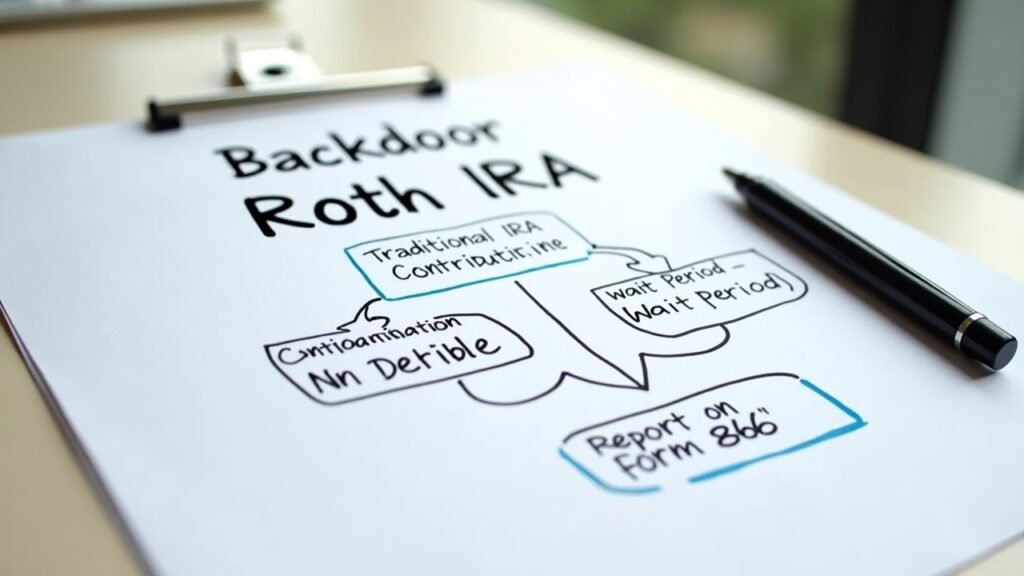
In simple terms, a backdoor Roth IRA is a two-step process where you contribute to a traditional IRA and then convert those funds into a Roth IRA. It’s not a special account type — it’s more of a strategy. The IRS doesn’t technically have a product called a “backdoor Roth,” which confused me at first.
The beauty of this approach is that it sidesteps the Roth IRA income limits entirely. You make a non-deductible contribution to a traditional IRA, then you convert it. That’s it. Well, mostly — there’s a catch I’ll get to in a minute.
Why High Income Earners Should Actually Care
When you’re earning above the income threshold, your retirement savings options start feeling kinda limited. Sure, you’ve got your 401(k), maybe an HSA if you’re lucky. But the Roth IRA’s tax-free withdrawals in retirement are seriously hard to beat.
I remember sitting with my financial advisor back in 2019 and she casually mentioned the backdoor Roth conversion like everyone knew about it. I literally said, “Wait, that’s allowed?” She laughed. It was a little embarrassing, honestly, but that conversation changed my entire retirement planning approach.
Tax diversification is huge when you’re a high earner. Having a mix of pre-tax and after-tax retirement accounts gives you way more flexibility when you’re pulling money out later. Think of it as not putting all your eggs in one tax basket.
The Step-by-Step Process (It’s Easier Than You Think)
Step 1: Open a traditional IRA if you don’t already have one. Most brokerages like Fidelity or Vanguard make this stupid easy.
Step 2: Make a non-deductible contribution. For 2024, that’s up to $7,000 (or $8,000 if you’re 50 or older).
Step 3: Convert the traditional IRA funds to your Roth IRA. Some people do this immediately, others wait a few days. I personally do it the next business day.
Step 4: File IRS Form 8606 with your tax return to report the non-deductible contribution. Don’t skip this — I almost did once and my accountant was not happy with me.
The Pro-Rata Rule: The Trap Nobody Warns You About

Okay, this is where I messed up my first year. If you have existing pre-tax money sitting in a traditional IRA, the IRS uses something called the pro-rata rule to calculate how much of your conversion is taxable. Basically, you can’t just convert the non-deductible portion and pretend the pre-tax money doesn’t exist.
The workaround? Roll any existing traditional IRA funds into your employer’s 401(k) plan before doing the conversion. This is sometimes called “clearing the deck,” and it was a game-changer for me. Not every 401(k) accepts rollovers though, so check with your plan administrator first.
Common Mistakes I’ve Seen (and Made)
Waiting too long to convert after contributing is probably the biggest one. If your money grows in the traditional IRA before conversion, you’ll owe taxes on those gains. Also, forgetting to file Form 8606 can create a mess where the IRS thinks your contribution was deductible — and then you get taxed twice.
Advertisements
Another rookie move is assuming this strategy will be available forever. Congress has floated proposals to eliminate the backdoor Roth more than once. Nothing’s passed yet, but it’s worth being aware of.
Your Next Move
Look, if you’re a high income earner who’s been ignoring the backdoor Roth IRA strategy, you’re literally leaving tax-free growth on the table. It’s not complicated once you understand the steps, but everyone’s tax situation is different — so please talk to a qualified tax professional before diving in.
And if you’re hungry for more practical tax strategies and financial planning tips, swing by the Deduction Desk blog. We break down stuff like this every week in a way that actually makes sense. Your future retired self will thank you!