
Advertisements
Qualified Opportunity Zone Tax Benefits: What I Wish I Knew Before Investing
Did you know that there are over 8,700 designated Opportunity Zones across the United States, covering low-income communities where your investment could literally change lives — and your tax bill? I stumbled onto this whole thing a few years back when a colleague mentioned it at a staff lunch, and honestly, I almost ignored it. Big mistake almost made. Let me save you from that same near-miss!
Qualified Opportunity Zones (QOZs) were created under the Tax Cuts and Jobs Act of 2017, and they’ve been quietly helping savvy investors defer — and even reduce — capital gains taxes ever since. If you’ve got capital gains sitting around and you’re not sure what to do with them, this might be exactly the strategy you’ve been looking for. Seriously, keep reading.
So, What Even Is a Qualified Opportunity Zone?
A Qualified Opportunity Zone is basically a designated low-income community where the government is trying to encourage economic development through tax incentives. Think of it like the government saying, “Hey, invest here and we’ll cut you a deal on taxes.” The zones were nominated by state governors and certified by the U.S. Treasury.
To actually take advantage of these benefits, you invest your capital gains into a Qualified Opportunity Fund (QOF) — not directly into the zone itself. That distinction tripped me up at first, and I spent way too long confused about it. A QOF is the investment vehicle, and it’s what connects your money to the zone.
The Three Big Tax Benefits You Need to Know
Okay, here’s the meat and potatoes of it all. There are three core qualified opportunity zone tax benefits, and each one builds on the last like a staircase.
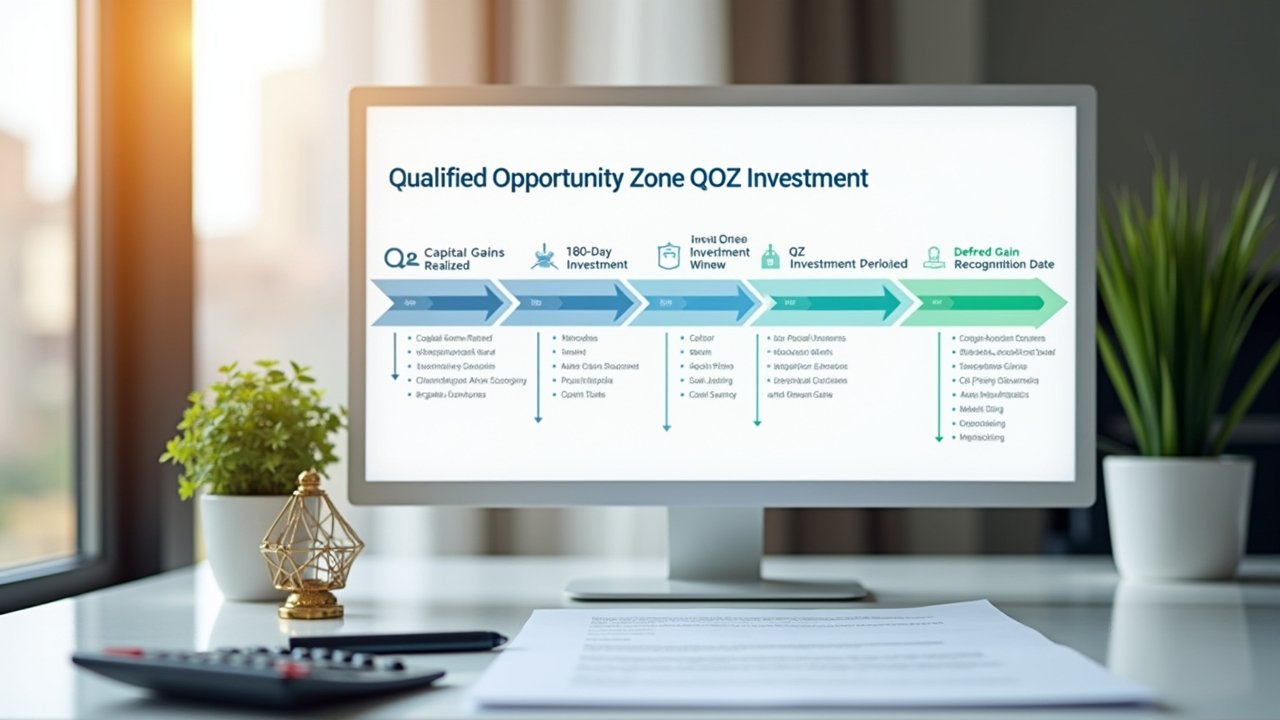
- Deferral of Capital Gains: When you reinvest eligible capital gains into a QOF within 180 days, you can defer paying taxes on those gains until the investment is sold or exchanged — or until December 31, 2026, whichever comes first. That’s basically an interest-free loan from the IRS, in a way.
- Reduction of Capital Gains: If you held your QOF investment for at least 5 years before December 31, 2026, you used to get a 10% step-up in basis. The 7-year benefit (15% step-up) has now expired, but it’s still worth understanding the history in case rules shift again.
- Exclusion of New Gains: This one’s my favorite. If you hold your QOF investment for at least 10 years, any new appreciation on that investment is completely excluded from capital gains tax. Zero. Nada. That’s huge.
When I first learned about that 10-year exclusion, I literally said “wait, what?” out loud in my living room. It almost sounds too good to be true, but it’s legit — it’s outlined right there in IRC Section 1400Z-2.
Common Mistakes Investors Make (Including Me)
One thing I’ve seen a lot — and personally messed up early on — is missing that 180-day reinvestment window. You’ve got exactly 180 days from the date of your capital gains event to roll them into a QOF, and if you blink, you miss it. Set a calendar reminder. Like, right now.
Another mistake? Not doing proper due diligence on the QOF itself. Not all funds are created equal, and some are way riskier than others depending on the types of projects they’re invested in — whether that’s real estate, operating businesses, or mixed-use developments. Always, always check the fund’s track record and management team before committing. The SEC’s EDGAR database can help you research registered funds.
Advertisements
Is This Strategy Right for You?
Look, Opportunity Zone investing isn’t for everyone. It works best for people who have significant capital gains — from selling stocks, a business, or real estate — and who can afford to lock up that money for several years. Liquidity is basically out the window once you’re in.
That said, if you’ve got the patience and the capital, the long-term tax savings on new gains alone can be extraordinary. It’s one of those strategies that feels a little complicated upfront but makes total sense once you walk through it slowly. Talk to a tax advisor or CPA who actually specializes in this area — not just any generalist — because the rules are nuanced and the stakes are real.
Your Next Step Starts Here
Qualified Opportunity Zone tax benefits are genuinely one of the more powerful tools in the U.S. tax code right now, and not nearly enough everyday investors know about them. The deferral, the potential reduction, and especially that 10-year exclusion on new gains? Worth exploring for sure. Just make sure you go in informed, work with qualified professionals, and always consider the ethical side of things — you’re investing in real communities with real people, so choose funds that are actually doing good work on the ground.
Want to keep nerding out on smart tax strategies like this one? Head over to Deduction Desk — there’s a whole library of posts designed to help you keep more of what you earn, written in plain English. No jargon, no fluff. Just real talk about real money.