
Rental Income Taxes, Landlords, and Schedule E: What I Wish Someone Had Told Me Before My First Filing
Advertisements
Here’s a fun stat to kick things off — the IRS estimates that rental property owners underreport income by billions of dollars every single year. Billions! Now, I’m not saying anyone’s doing it on purpose (okay, some probably are), but a huge chunk of that gap comes from landlords who genuinely don’t understand how rental income taxes work. I was one of those landlords once, and let me tell you, my first tax season as a property owner was a total disaster.
If you’re a landlord — whether you’ve got one duplex or a small portfolio — understanding Schedule E is absolutely critical. It’s the form that can either save you thousands or cost you thousands, depending on how well you fill it out. So let me walk you through what I’ve learned the hard way.
What Exactly Is Schedule E, Anyway?
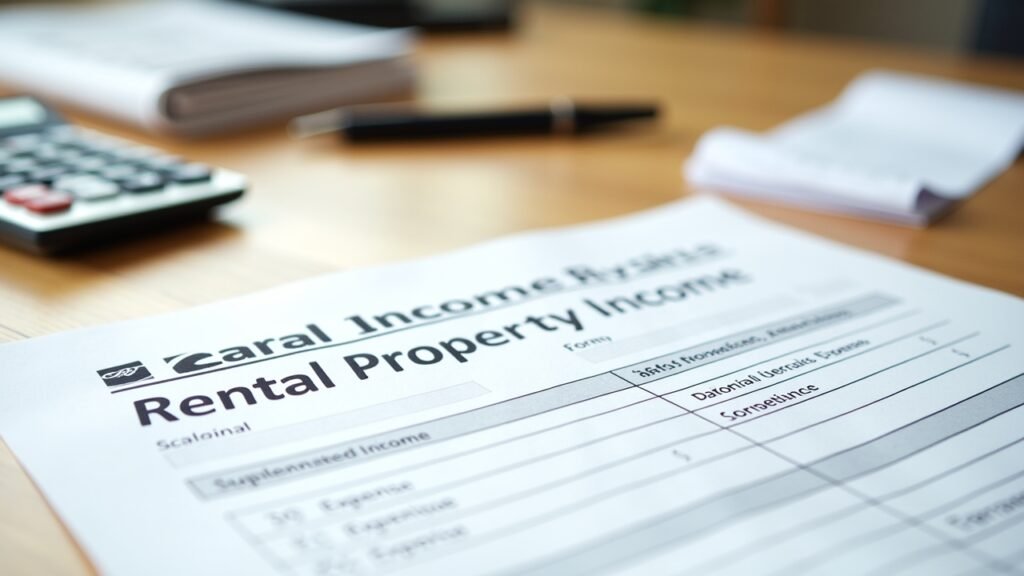
Schedule E (Supplemental Income and Loss) is the IRS form where you report rental income and expenses from real estate properties you own. It’s attached to your personal Form 1040, and honestly, it’s not as scary as it looks. Think of it as a profit-and-loss statement for your rental business.
You’ll list each property, the total rents collected, and then subtract all your allowable deductions. The net number — positive or negative — flows right onto your tax return. Simple in theory, messy in practice.
The Mistake That Cost Me $2,300
My first year as a landlord, I totally forgot to track my mileage driving to the property for repairs and inspections. I also didn’t realize I could deduct the cost of advertising the rental on Zillow and Craigslist. Those seem like small things, but when I finally sat down with a CPA the following year, she looked at my records and basically said, “You overpaid by about $2,300.” My stomach dropped.
That experience taught me something crucial — every legitimate expense matters. Don’t sleep on the small stuff, because it adds up fast.
What Rental Expenses Can You Actually Deduct?
This is where Schedule E gets really powerful for landlords. The IRS allows you to deduct a pretty generous list of expenses related to managing and maintaining your rental property. Here are the big ones:
- Mortgage interest paid on the rental property
- Property taxes
- Insurance premiums (landlord policy, not your personal homeowner’s)
- Repairs and maintenance — think fixing a leaky faucet, not adding a new deck
- Depreciation of the property (this one’s huge and often overlooked)
- Property management fees
- Utilities you pay on behalf of tenants
- Travel expenses to and from the property
- Legal and professional fees
- Advertising costs to find tenants
One thing that tripped me up early on was the difference between a repair and an improvement. Repairs are deducted in the current year, while improvements must be depreciated over time. Replacing a broken window? Repair. Installing brand-new energy-efficient windows throughout the whole house? That’s an improvement, my friend.
Depreciation: The Deduction That Feels Like Free Money

Okay, it’s not actually free money, but depreciation is honestly the best tax benefit of owning rental property. The IRS lets you deduct the cost of the building itself (not the land) over 27.5 years for residential rental property. So if your building was worth $275,000, you’d get to deduct $10,000 every single year — even if the property is actually going up in value.
Advertisements
I remember the first time I saw that deduction on my return. It turned what would’ve been a taxable gain into a paper loss. I literally texted my buddy “why doesn’t everyone own rentals?!” He didn’t respond, which is fair.
Passive Activity Loss Rules: The Catch
Here’s where things get a little annoying. Rental income is generally considered passive income by the IRS, which means losses can usually only offset other passive income. However, if your adjusted gross income is under $100,000 and you actively participate in managing the property, you can deduct up to $25,000 in rental losses against your regular income. That special allowance phases out between $100K and $150K.
This rule bit me once when I got a raise at my day job and suddenly couldn’t claim the full loss. Taxes are funny like that — you make more money and somehow feel like you lost.
Your Next Step as a Landlord
Look, rental income taxes don’t have to be overwhelming. Keep meticulous records throughout the year, understand what goes on Schedule E, and don’t be afraid to hire a tax professional — especially in your first couple of years. The money you spend on good advice will almost always come back to you in deductions you didn’t know existed.
Every landlord’s situation is a little different, so make sure you’re customizing this information to fit your specific properties and financial picture. And please, always report your income honestly — the penalties for underreporting aren’t worth it. If you found this helpful, check out more posts on Deduction Desk where we break down taxes in a way that actually makes sense.