Advertisements
Inflation Tax Bracket Creep Explained: Why Your Raise Might Actually Cost You More
Here’s a fun fact that’ll make you do a double-take: you could get a raise this year and somehow end up with less purchasing power than before. Wild, right? I remember when I got my first “real” salary bump a few years back — I was so excited, told my wife we should celebrate. Then tax season hit and I was like, wait… where did all that extra money go? That, my friend, is bracket creep in action.
Inflation tax bracket creep is one of those sneaky financial concepts that doesn’t get nearly enough attention. It quietly chips away at your income without anyone sending you a notice. So let’s break it down together, plain and simple.
What Is Tax Bracket Creep?
Tax bracket creep — also called fiscal drag — happens when inflation pushes your income into a higher tax bracket, even though your real purchasing power hasn’t actually increased. Your paycheck looks bigger on paper. But in reality, you’re just keeping up with rising prices, not getting ahead.
Think of it this way. If a loaf of bread cost $2 last year and costs $2.50 today, you need more dollars to buy the same loaf. But if the government taxes those extra dollars at a higher rate, you’re actually falling behind. It’s a double hit — inflation on one side, higher taxes on the other.
According to the Tax Policy Center, this is a well-documented phenomenon that has affected millions of middle-class workers over the decades, especially during high-inflation periods like the 1970s and again more recently.
How Tax Brackets Actually Work
Real quick — let’s make sure we’re on the same page about tax brackets, because there’s a lot of confusion out there. In the U.S., we use a progressive tax system. That means different portions of your income are taxed at different rates, not your whole income at one flat rate.
- The first chunk of your income gets taxed at the lowest rate (currently 10%).
- As your income climbs, each additional chunk gets taxed at a higher rate.
- Only the income above a threshold gets hit with the higher rate — not everything you earned.
You can check the current federal tax brackets directly on the IRS official website. They do update the brackets annually — which brings me to my next point.
When Bracket Indexing Fails to Keep Up
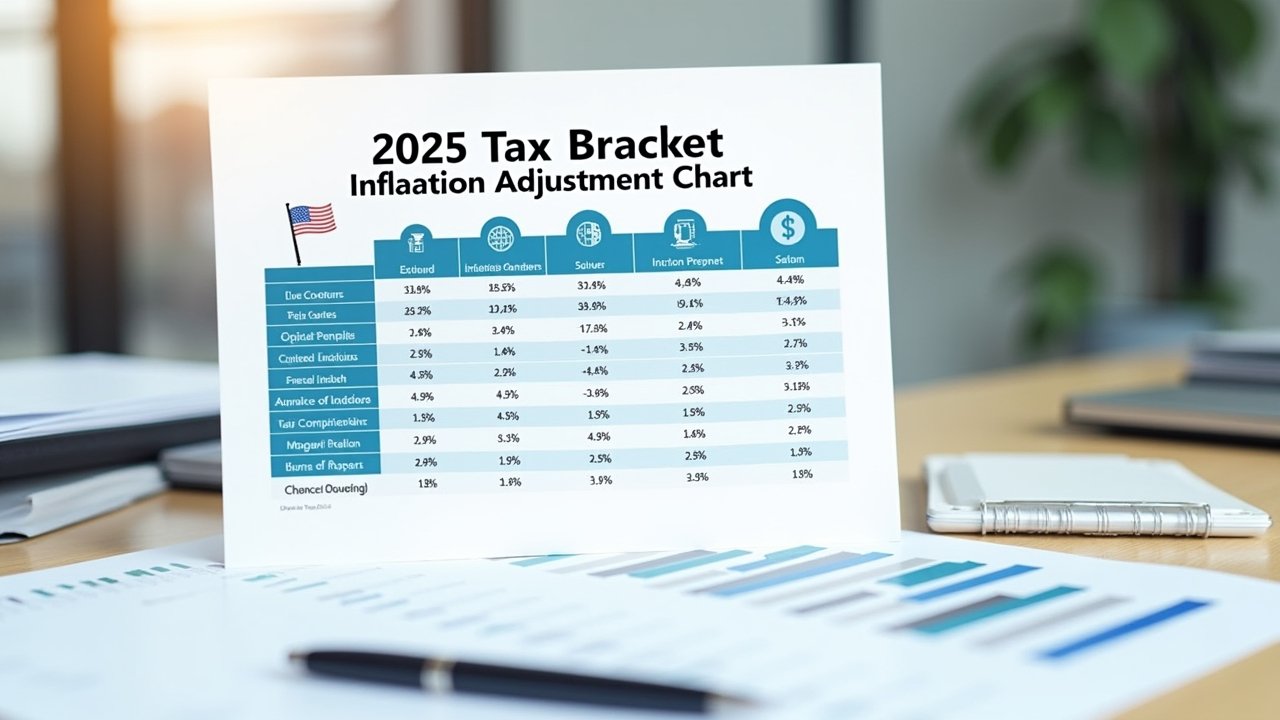
The IRS does something called inflation indexing — they adjust the tax brackets each year based on inflation data. Sounds good, right? In theory, yes. In practice, it doesn’t always keep up perfectly, especially during periods of rapid inflation.
Advertisements
Back in 2022, inflation hit around 8% in the U.S. — the highest in 40 years, according to the Bureau of Labor Statistics. Even with indexing, many workers found themselves creeping into higher brackets because wages were being adjusted faster than the bracket thresholds. It’s frustrating, honestly. You feel like you’re winning but the math says otherwise.
A Real-World Example That Clicks
Let’s say you earned $41,000 in 2023 and got a 5% raise in 2024, bringing you to $43,050. Sounds great! But if the tax bracket threshold only moved up 3% due to partial indexing, you’ve now crossed into a slightly higher bracket on a portion of that income. Your raise didn’t match real inflation, but your taxes went up anyway. That’s bracket creep doing its thing — silently and efficiently.
What You Can Actually Do About It
Okay, so now that we’ve identified the problem, let’s talk solutions. Because I’m not just here to stress you out!
- Maximize your pre-tax contributions: Contributing more to a 401(k) or traditional IRA lowers your taxable income and can keep you in a lower bracket. The IRS sets annual contribution limits — check them and try to get as close as possible.
- Use an HSA if you qualify: Health Savings Accounts are triple tax-advantaged and reduce your taxable income.
- Work with a tax professional: Seriously, this stuff is complex. A good CPA can spot strategies you’d never think of on your own.
It All Adds Up — And You Deserve to Know It
Bracket creep isn’t a conspiracy or anything dramatic — it’s just how inflation and tax systems interact when they’re not perfectly synchronized. Understanding it puts you in a better position to make smarter financial decisions, whether that’s adjusting your withholding, maxing out deductions, or simply knowing why your take-home pay feels thinner every year.
Don’t let the tax code work against you without at least knowing it’s happening. Stay informed, ask questions, and remember — every dollar you keep legally in your pocket is a dollar working for you. If you found this helpful, there’s a whole lot more where that came from. Head over to Deduction Desk and explore other posts that break down complex tax topics just like this one — no jargon, no fluff, just real talk about your money.