Advertisements

Setting Rates Self-Employed After Taxes: What Nobody Told Me When I Started
Here’s a stat that stopped me cold when I first went freelance: self-employed workers pay up to 15.3% in self-employment tax before federal and state income taxes even enter the picture. Nobody warned me about that. Seriously, nobody. I set my first freelance rate based on what I used to make per hour at my old job, and then tax season came around and… yeah. It was rough.
If you’re self-employed and trying to figure out how to set rates that actually make sense after taxes, you’re in the right place. This is the stuff I wish someone had sat me down and explained over coffee.
Why Your Old Hourly Rate Doesn’t Work Anymore
When I left my 9-to-5, I was making $30 an hour. So naturally, I charged $30 an hour as a freelancer. Big mistake. Huge. What I didn’t account for was that my employer had been covering half of my payroll taxes, my health insurance, and a retirement match — all things I now had to pay for myself.
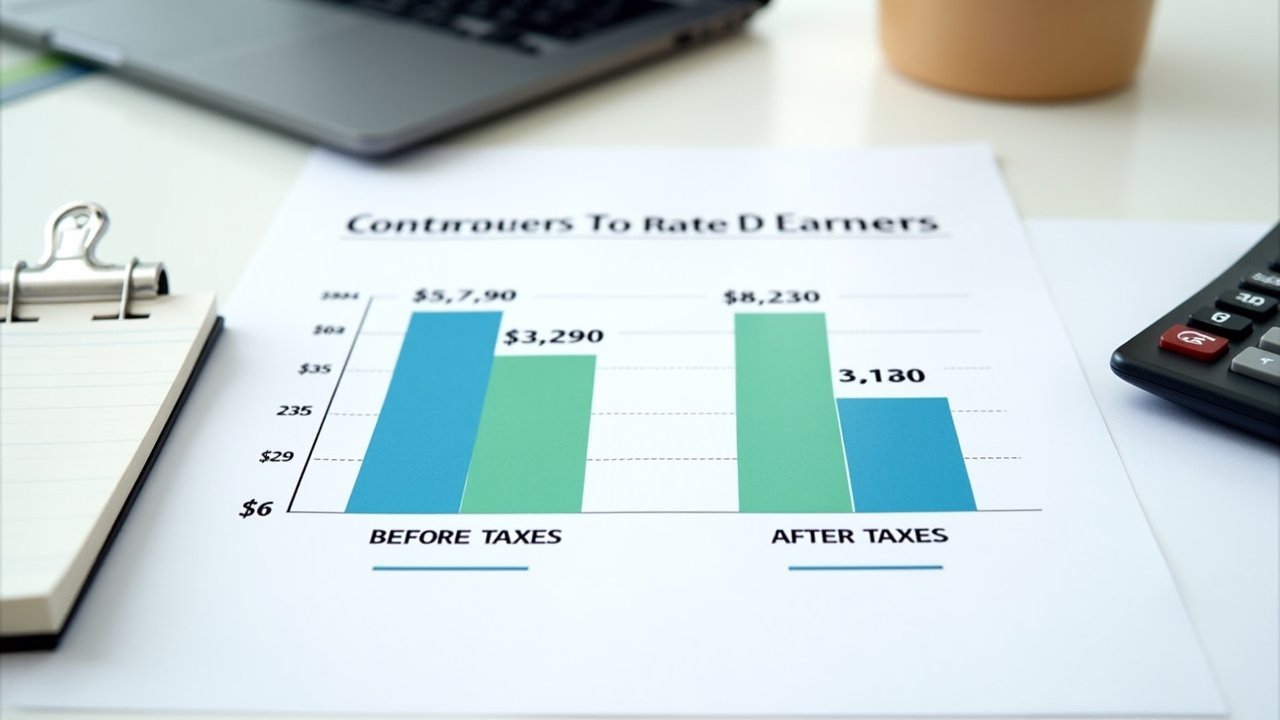
As a self-employed person, you’re now both the employee and the employer. That means you owe the full 15.3% self-employment tax on top of your regular income tax. So that $30/hour? It was really more like $19 after taxes. Lesson learned the hard way.
The Basic Formula for Setting Your Rate
Okay, so here’s the framework I eventually landed on, and it’s pretty simple once you break it down. Start with your desired annual take-home income — the number you actually want to live on after taxes are paid.
- Step 1: Figure out your target take-home pay (say, $50,000/year).
- Step 2: Add your estimated tax burden. A safe estimate for most freelancers is 25–30% of gross income for federal, state, and self-employment taxes combined.
- Step 3: Add your business expenses — software, equipment, insurance, etc.
- Step 4: Divide by your actual billable hours per year (not 2,080 — realistically, more like 1,000–1,500 for most freelancers).
So if I want $50,000 take-home, I need to gross maybe $70,000–$75,000 to cover taxes. Add $5,000 in business expenses and you’re looking at needing to earn around $80,000. Divide that by 1,200 billable hours and your rate should be about $67/hour. That’s a far cry from $30.
Don’t Forget Quarterly Estimated Taxes
This one tripped me up in year one. The IRS expects self-employed folks to pay taxes four times a year through estimated quarterly payments. If you skip those, you’ll get hit with penalties — and a giant bill in April that feels like a punch to the gut.
I now set aside 30% of every payment I receive into a separate savings account. It’s a habit that has literally saved me from financial stress more times than I can count. Treat it like that money doesn’t exist, and you’ll be fine.
Advertisements
Adjusting Your Rate Over Time
Setting your rate isn’t a one-and-done thing. Your expenses change, tax laws shift, and your skill level grows — all of that should be reflected in what you charge. I revisit my rates every January, kind of like a personal performance review.
Also worth mentioning: don’t be afraid to charge more than you think you’re worth. Freelance pricing psychology is real, and sometimes a higher rate actually attracts better clients. I once doubled my rate and landed a better client the very next week. True story.
You’ve Got This — Now Go Do the Math
Setting rates as a self-employed person isn’t just about what sounds fair — it’s about making sure the math actually works after the taxman takes his cut. Take the time to calculate your real costs, factor in your tax obligations, and set a rate that supports your life and your business.
Every freelancer’s situation is different, so customize these numbers to fit yours. And always, always stay on the right side of your tax responsibilities — both for your own peace of mind and for long-term sustainability.
Want to keep learning how to make your self-employed finances work harder for you? Head over to the Deduction Desk blog — there’s a lot more where this came from, and it might just save you a whole lot of stress come April.