Advertisements

Schedule C Filing Guide for Self-Employed: What I Wish Someone Had Told Me
Did you know that over 16 million Americans are fully self-employed? That’s a lot of people figuring out taxes on their own — and trust me, I was one of them, completely lost during my first tax season as a freelancer. Schedule C was this mysterious form I kept hearing about, and honestly, it felt like trying to read a foreign language.
But here’s the thing: once you actually understand what Schedule C is and how it works, it stops being scary. So let me walk you through it like a friend who’s already made the mistakes so you don’t have to!
What Is Schedule C, Anyway?
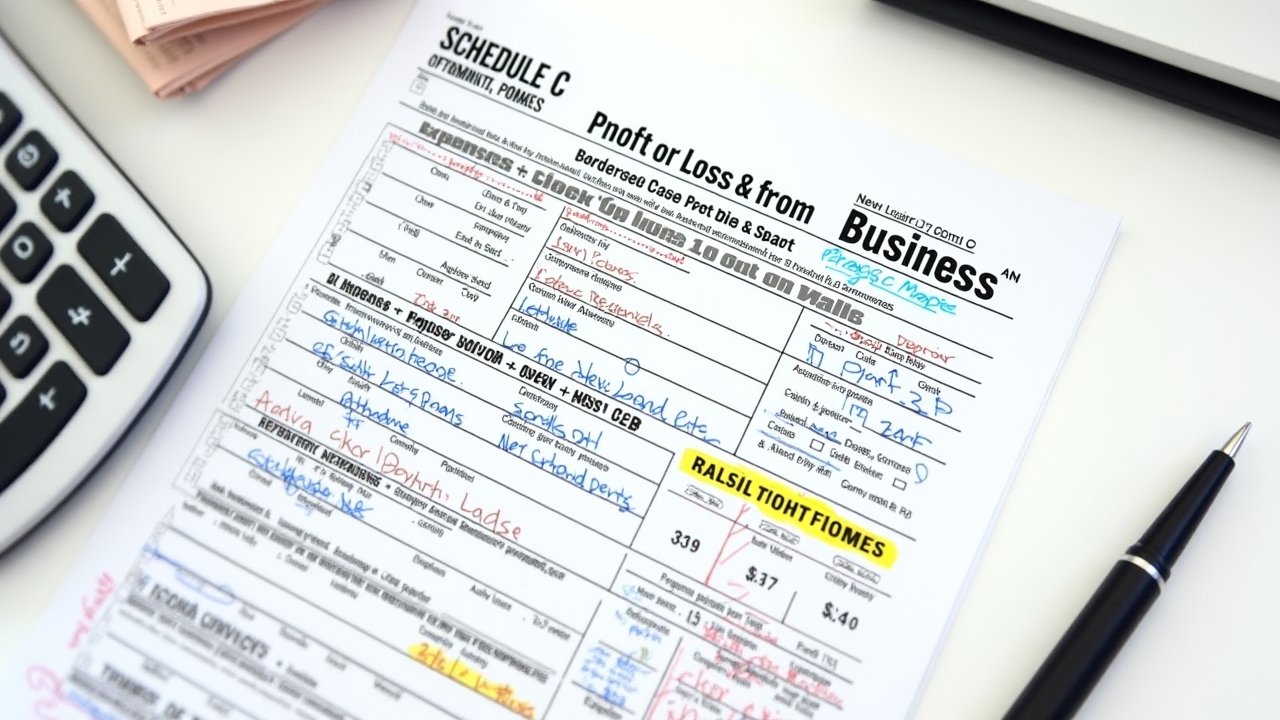
Schedule C is an IRS form used to report profit or loss from a business you operated as a sole proprietor. Basically, if you’re self-employed — whether you’re a freelancer, gig worker, independent contractor, or running a small side hustle — this is your form. It gets attached to your personal tax return (Form 1040).
The form asks you to list your business income, subtract your business expenses, and report what’s left as your net profit or loss. That net number is what gets taxed. Simple in theory, a little messy in practice — but totally doable.
Who Needs to File Schedule C?
You’ll need to file Schedule C if you earned $400 or more from self-employment during the tax year. That includes freelance writing, driving for rideshare apps, selling handmade goods, consulting, tutoring — basically any work where nobody’s withholding taxes for you.
- Sole proprietors running a business
- Freelancers and independent contractors
- Gig economy workers (Uber, Fiverr, Etsy sellers, etc.)
- Single-member LLCs (unless you’ve elected a different tax status)
If you’re not sure which category fits you, the IRS Self-Employed Tax Center is actually a pretty solid starting point.
The Big Sections of Schedule C (Don’t Panic)
When I first opened Schedule C, my eyes went wide. There are five parts to the form, but most people only deal with two or three of them. Let me break it down real quick.
Part I — Income
This is where you report your gross income from self-employment. Add up everything clients paid you, every invoice you sent out, every PayPal transfer. All of it counts!
Advertisements
Part II — Expenses
This is honestly the fun part. This is where your business deductions live. Things like home office expenses, mileage, software subscriptions, advertising costs — all of it can reduce your taxable income.
- Home office deduction
- Business-related travel and mileage
- Professional services (like hiring a bookkeeper)
- Marketing and advertising costs
- Equipment and supplies
One mistake I made early on? I forgot to track my mileage for client meetings. Left a good chunk of deductions on the table that year. Don’t be me — use an app like MileIQ to log every single trip.
Parts III, IV, and V
These sections cover cost of goods sold (relevant if you sell physical products), vehicle information, and other miscellaneous expenses. Most service-based freelancers barely touch Part III, but it’s worth knowing it’s there.
Self-Employment Tax — The Part Nobody Warns You About
Here’s something that caught me completely off guard my first year: self-employment tax. When you work for an employer, they cover half of your Social Security and Medicare taxes. When you’re self-employed, you cover both halves — that’s 15.3% on top of your regular income tax.
The good news is you can deduct half of that self-employment tax on your return. It’s a small comfort, but hey — every dollar counts when you’re running your own show.
Tips to Make Filing Schedule C Less of a Headache
- Keep your records all year long, not just at tax time. Seriously. Future you will be grateful.
- Open a separate bank account for your business income and expenses. It makes everything cleaner.
- Use accounting software like QuickBooks Self-Employed or Wave to track income and expenses automatically.
- Make quarterly estimated tax payments to avoid a scary bill (and penalties) in April.
- Consider working with a CPA at least for your first year. The investment usually pays for itself in deductions found.
Ready to File with Confidence?
Look, Schedule C doesn’t have to be the thing that keeps you up at night. Once you understand the basics — report your income, claim your deductions, know your self-employment tax obligation — the whole process starts to feel a lot more manageable. And remember, every situation is a little different, so always make sure the details match your specific business setup.
One last thing: please, please don’t try to game the system by claiming sketchy deductions. The IRS flags Schedule C returns more than almost any other form. Keep everything legitimate and documented.
If this helped even a little, there’s plenty more where that came from! Head over to Deduction Desk — we cover everything from tax write-offs to financial tips for self-employed folks just like you. You’ve got this!