Advertisements

Estimated Tax Underpayment Penalty Calculation: What I Learned the Hard Way
Did you know the IRS collected over $1.8 billion in underpayment penalties in a single year? Yeah. That number hit me like a ton of bricks when I first saw it — mostly because I had personally contributed to that pile without even knowing it. Fun times.
If you’re self-employed, a freelancer, or you’ve got income that doesn’t come with automatic withholding, this stuff matters — a lot. Understanding how the estimated tax underpayment penalty calculation works can literally save you hundreds of dollars. So let me break it down the way I wish someone had broken it down for me.
What Is the Estimated Tax Underpayment Penalty, Anyway?
Okay, so here’s the deal. The IRS expects you to pay taxes throughout the year, not just in April. If you don’t pay enough — either through withholding or quarterly estimated payments — they slap you with a penalty. It’s called the underpayment of estimated tax penalty, and it’s calculated using the federal short-term interest rate plus 3%. That rate changes quarterly, so it’s not a flat number you can just memorize.
For 2024, that rate has been hovering around 8%. Not the end of the world, but not something you want to ignore either. Think of it like a late fee on your electric bill — annoying, avoidable, and totally your fault if you miss it.
How the Calculation Actually Works
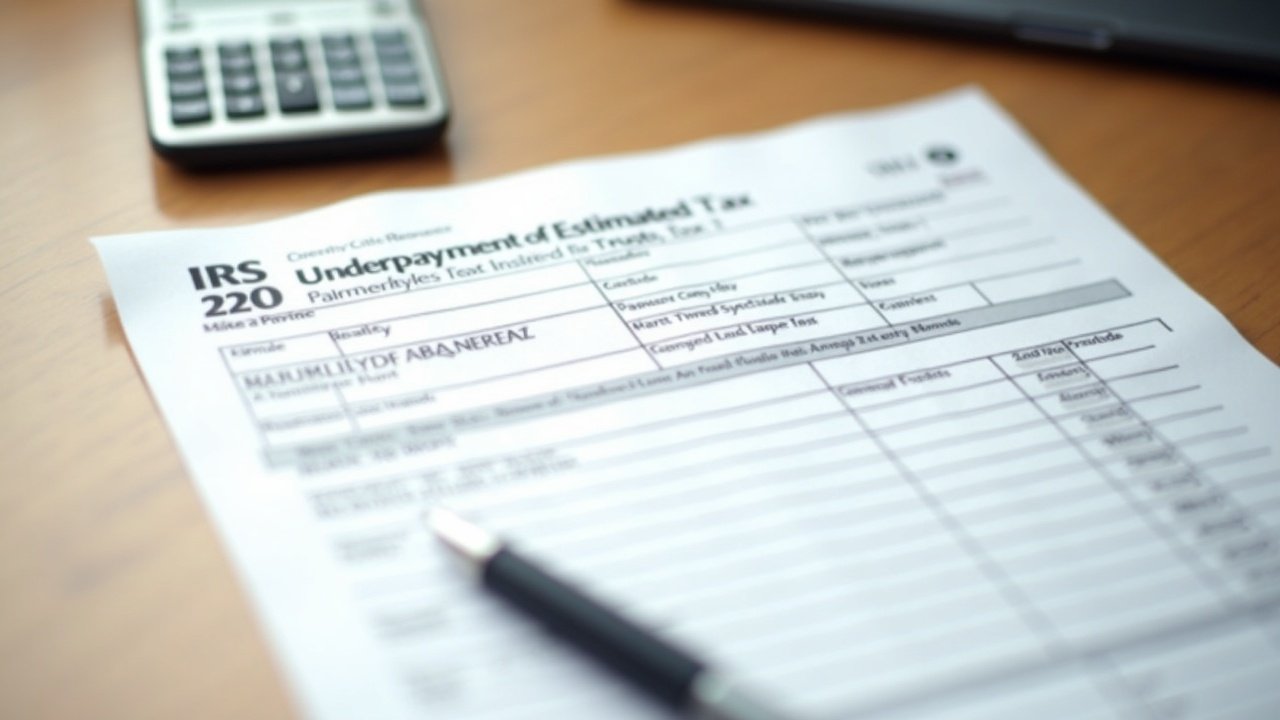
This is where people’s eyes glaze over — including mine the first time I looked at IRS Form 2210. But stick with me. The penalty is calculated per quarter, based on how much you underpaid during that specific period. It’s not just one big lump sum at the end.
Here’s a simple breakdown of what goes into the calculation:
- The underpayment amount — how much you were short for that quarter
- The applicable interest rate — updated each quarter by the IRS
- The number of days you were late — yes, it’s day-by-day, not month-by-month
So the formula looks something like this: Underpayment Amount × (Annual Rate ÷ 365) × Number of Days Late. It sounds complicated, but there are IRS tools and worksheets that walk you through it step by step. Honestly, using a tax software like TurboTax or working with a CPA makes this way less painful.
The Safe Harbor Rule — Your Best Friend
Here’s something I wish I’d known years ago: you can avoid the penalty altogether by following the safe harbor rule. Basically, if you pay at least 90% of your current year’s tax liability, or 100% of last year’s tax (110% if your income was over $150,000), you’re in the clear. No penalty. Zip. Zero.
Advertisements
I personally use the prior-year safe harbor method because it’s predictable. I just look at what I owed last year, divide it by four, and pay that every quarter. No guessing, no surprises. It’s not sexy, but it works.
Common Mistakes That Trigger the Penalty
Oh, I’ve made so many of these. Let me save you the headache.
- Skipping a quarterly payment because “I’ll catch up next quarter” — spoiler: the penalty is calculated per quarter, so catching up later doesn’t erase the earlier underpayment
- Forgetting that the due dates are April 15, June 15, September 15, and January 15 — not evenly spaced, which trips people up all the time
- Not adjusting estimates after a big income jump mid-year — if you land a huge client or sell an investment, update your payments ASAP
- Assuming W-2 withholding covers your side hustle income — it usually doesn’t, not fully
You’ve Got This — Here’s Where to Go From Here
Look, taxes aren’t anyone’s idea of a good time. But once you understand how the estimated tax underpayment penalty calculation works, it stops being this scary mystery and starts being something you can actually manage. Use the safe harbor rule, mark your quarterly due dates on your calendar, and don’t be afraid to use IRS Direct Pay to send your payments easily online.
Every tax situation is a little different, so feel free to tweak this info to fit your specific income and filing status. And always — always — consult a tax professional if things get complicated. Ethical, accurate tax filing isn’t just about avoiding penalties; it’s about peace of mind.
Want to keep learning this stuff without wanting to pull your hair out? Head over to Deduction Desk — we’ve got more posts just like this one that break down the tax world in plain, everyday language. You won’t regret it.