
Earned Income Tax Credit Eligibility 2025: What You Actually Need to Know (Without the Headache)
Advertisements
Here’s a wild stat that still blows my mind — the IRS estimates that roughly 1 in 5 eligible taxpayers don’t claim the Earned Income Tax Credit every single year. That’s literally billions of dollars left on the table! I was one of those people back in 2019, and honestly, I’m still a little salty about it.
The EITC is one of the most powerful refundable tax credits out there for low-to-moderate income workers. But figuring out whether you actually qualify? That’s where things get messy. So let me break down earned income tax credit eligibility for 2025 in plain English, because nobody should miss out on free money.
So What Exactly Is the EITC?
The Earned Income Tax Credit is basically the government’s way of giving working folks a financial boost. Unlike a regular deduction that just lowers your taxable income, the EITC is refundable — meaning even if you owe zero taxes, you can still get money back. Pretty sweet deal, right?
For the 2025 tax year, the maximum credit ranges from about $632 for workers with no qualifying children all the way up to $7,830 for those with three or more kids. The exact amount depends on your income, filing status, and how many qualifying dependents you have. You can check the IRS EITC page for the most current figures.
The Income Limits — This Is Where I Messed Up
Okay so here’s my embarrassing confession. A few years back I got a small raise at work and just assumed I no longer qualified. Didn’t even bother checking. Turns out I was still well within the income threshold and I missed out on over $2,000.
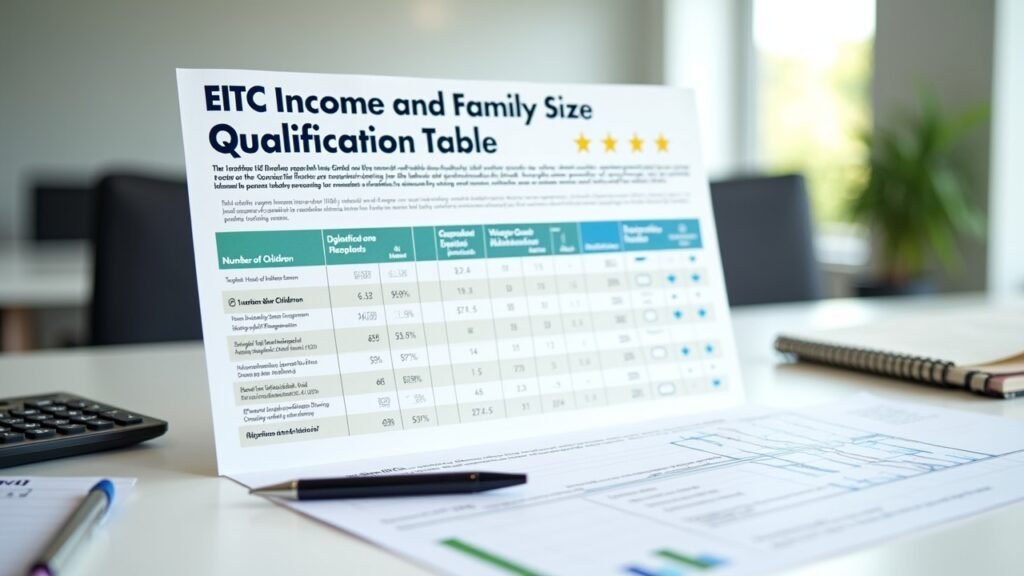
For tax year 2025, the income limits have been adjusted for inflation. Single filers with no children need to have earned income below roughly $18,591, while married filing jointly with three or more children can earn up to around $66,819. These numbers shift every year, so always double-check with the IRS EITC income tables.
Investment income also matters. For 2025, your investment income must be $11,600 or less. That includes things like interest, dividends, and capital gains.
Who Counts as a Qualifying Child?
This part trips people up more than anything. A qualifying child for EITC purposes must meet specific age, relationship, and residency tests.
- The child must be under 19 at the end of the year (or under 24 if a full-time student).
- They need to have lived with you in the U.S. for more than half the year.
- The child has to be your son, daughter, stepchild, foster child, sibling, or a descendant of any of these.
- The child can’t file a joint return with a spouse (unless it’s only to claim a refund).
My neighbor spent three hours arguing with her tax preparer about whether her nephew qualified. He did, by the way — siblings and their descendants count. She got an extra $3,500 back that year.
Advertisements
What If You Don’t Have Kids?

Good news — you can still qualify! For 2025, workers without qualifying children must be at least 25 and under 65. You also need to have lived in the U.S. for more than half the year and can’t be claimed as a dependent on someone else’s return. The credit is smaller, sure, but $632 is still $632.
Filing Status Matters More Than You Think
Here’s a quick but important thing. If you file as “married filing separately,” you’re generally disqualified from claiming the EITC. That caught a coworker of mine off guard last year — she switched her filing status and lost the credit entirely.
You’ll need to file as single, head of household, married filing jointly, or qualifying surviving spouse. Also, you absolutely must have a valid Social Security number. An ITIN won’t cut it for this one.
Don’t Leave Money on the Table
Look, I get it — taxes are about as fun as a root canal. But taking twenty minutes to check your earned income tax credit eligibility could literally put thousands of dollars in your pocket. Use the IRS EITC Assistant tool if you’re unsure, and always file your return even if your income was low.
Everyone’s tax situation is a little different, so make sure you’re tailoring this info to your specific circumstances. And please, file honestly — EITC audits are more common than you’d think, and the penalties ain’t worth it.
Want more tips on maximizing your refund and understanding tax credits? Head over to Deduction Desk and browse around — we’ve got plenty of guides written for real people, not CPAs. Your wallet will thank you.