
Business Meal Tax Deduction 2026: What I Wish Someone Had Told Me Years Ago
Advertisements
Here’s a stat that still blows my mind — the IRS estimates that millions of small business owners leave money on the table every single year because they don’t properly track their meal deductions. I was one of those people for way too long! If you’re running a business in 2026 and you’re not crystal clear on how the business meal tax deduction works right now, pull up a chair because we need to talk.
Look, tax rules around meals have been a rollercoaster the past few years. Between the temporary 100% deduction during COVID and the return to stricter rules, it’s honestly been confusing for everyone. So let me break down exactly where things stand this year based on what I’ve learned — sometimes the hard way.
The Current Rules: What You Can Actually Deduct in 2025
Okay, so here’s the deal. That glorious 100% business meal deduction we enjoyed in 2021 and 2022? Gone. It was a temporary provision under the Consolidated Appropriations Act, and it expired at the end of 2022.
In 2026, we’re back to the standard 50% deduction for business meals. That means if you take a client out for a $100 dinner, you can deduct $50 on your tax return. Not as exciting, but hey, it’s still real money over the course of a year.
I remember the first year the 100% deduction kicked in — I went a little overboard with client dinners, not gonna lie. When it reverted back, my accountant gave me this look that basically said “told you to plan ahead.” Lesson learned.
What Actually Qualifies as a Deductible Business Meal
This is where people mess up constantly, and I was no exception. Not every meal you eat during the workday counts as a write-off. The IRS Publication 463 lays out pretty specific requirements.
To qualify for the business meal tax deduction in 2025, your meal needs to meet these criteria:
- The meal must be directly related to or associated with your business activities.
- A business discussion needs to happen before, during, or after the meal.
- You or an employee must be present at the meal.
- The expense can’t be lavish or extravagant — though honestly, the IRS has never clearly defined what “lavish” means.
One time I tried deducting my solo lunch at Chipotle because I was “thinking about business strategy.” Yeah, that doesn’t fly. You genuinely need a business purpose and typically another party involved.
Record-Keeping: The Boring Part That Saves Your Butt

I cannot stress this enough — keep your receipts and document everything. I lost roughly $2,000 in deductions one year because I had a shoebox of crumpled receipts with no notes on them. My accountant couldn’t do anything with that mess.
Advertisements
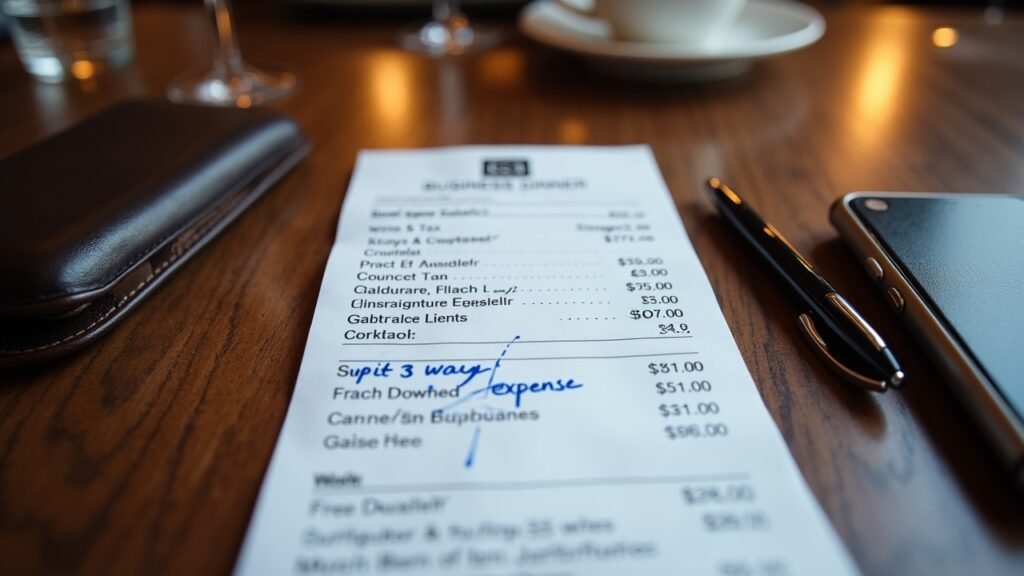
For every business meal, you should record the amount spent, the date and location, who was there, and the specific business purpose. Apps like Expensify make this ridiculously easy now. I just snap a photo of the receipt and add a quick note right there at the restaurant.
Pro tip from personal experience: write the business purpose on the back of the receipt immediately. Future you will be so grateful during tax season.
Common Mistakes I See (And Have Made Myself)
The biggest mistake is assuming every meal is deductible just because you own a business. It’s not. Grabbing coffee alone while checking emails doesn’t count.
Another trap is forgetting that entertainment expenses are still non-deductible under current tax law. So if you take a client to a baseball game and buy hot dogs, only the food portion might qualify — and only if it’s itemized separately on the receipt. The IRS guidance on this is worth bookmarking.
Also, don’t forget about employee meals. Meals provided for the convenience of the employer used to get favorable treatment, but those rules have tightened up too.
Keep More of What You Earn
The business meal tax deduction in 2025 isn’t as generous as it was a couple years ago, but it’s still a valuable tool for reducing your taxable income. The key is understanding the rules, keeping meticulous records, and being honest about what truly qualifies.
Every business situation is a little different, so always consult with a qualified tax professional about your specific circumstances. Tax law ain’t one-size-fits-all. For more tips on maximizing your deductions and keeping more money in your pocket, check out the latest posts on Deduction Desk — we’re always breaking down this stuff in plain English.